

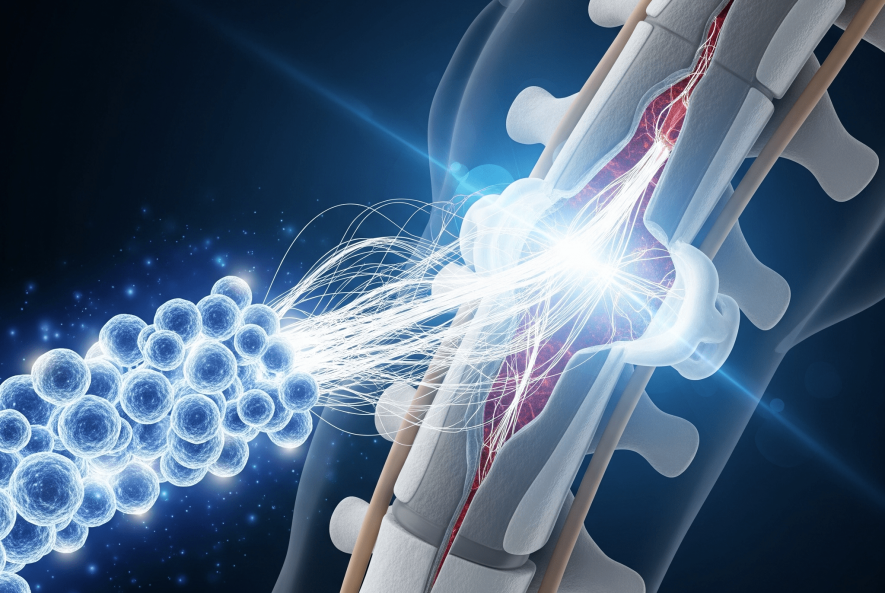
How Do Stem Cells Help Repair the Spinal Cord?
Spinal cord injuries are among the most complex and challenging conditions in medicine. They often result in permanent loss of movement or sensation, deeply affecting both the physical and psychological well-being of patients. For many years, traditional treatments have focused solely on rehabilitation and supportive care without addressing the root cause. Today, regenerative medicine is leading a true revolution, with stem cells emerging as a promising hope to repair damage and restore the possibility of recovery.
What Are Stem Cells?
Stem cells are unspecialized cells with a unique ability to transform into different specialized cell types (such as nerve cells and glial cells). In addition, they can secrete factors that help heal damaged tissue and stimulate the growth of new nerve cells.
How Do Stem Cells Contribute to Spinal Cord Repair?
When the spinal cord is injured, neurons are damaged and fibrous scar tissue forms, which blocks nerve signal transmission. Stem cell therapy aims to:
- Replace damaged neurons with new cells capable of conducting signals.
- Stimulate the regeneration of nerve fibers that carry messages between the brain and the rest of the body.
- Reduce fibrosis and scarring that hinder natural healing.
- Release growth factors that lower inflammation and aid tissue repair.
Encouraging Results from Clinical Trials
Recent studies and clinical trials have shown:
- Improvements in movement and sensation in some patients.
- Restoration of certain functions, such as bladder and bowel control.
- Reduction of chronic pain related to the injury.
While results vary from case to case, ongoing research confirms genuine qualitative improvements in a subset of patients.
Advantages of Stem Cell Therapy
- Relies on the body’s natural ability to heal.
- May be applied in both early and advanced stages of injury.
- Opens the door to integrative treatments combining stem cells, rehabilitation, and advanced bioengineering technologies.
Challenges and Future Prospects
Despite the progress, achieving complete recovery remains a long-term goal:
- Identifying the most suitable types of stem cells for use.
- Controlling the direction and differentiation of new cell growth.
- Ensuring long-term safety and preventing tumors or unforeseen complications.
However, with accelerating research, we may soon achieve an effective treatment that brings genuine hope of full recovery.
Conclusion
Stem cells are driving a true revolution in treating spinal cord injuries, transforming dreams that once seemed impossible into tangible scientific reality. As progress continues, complete recovery might be closer than we think.