

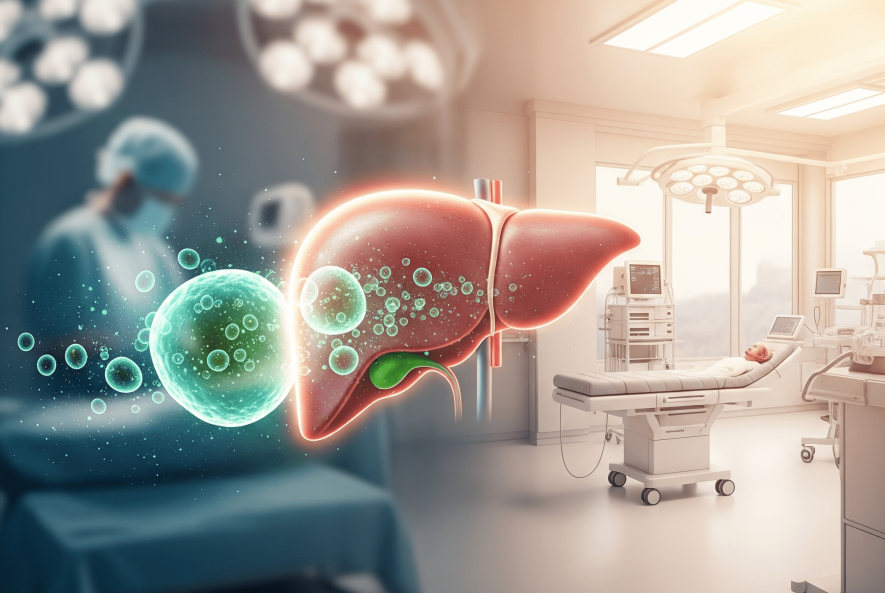
From Liver Transplant to Stem Cell Therapy: A Journey of Hope for Patients with Liver Failure
Liver failure is one of the most serious medical challenges threatening millions of lives worldwide. Cirrhosis and the resulting loss of liver function lead to severe complications that are often difficult to reverse. For many years, liver transplantation has remained the only treatment option for patients in advanced stages. However, this solution faces major obstacles, including the scarcity of donors and the risks associated with complex surgery. Here, stem cell therapy emerges as a new hope promising to change this reality.
How Do Stem Cells Work in Treating the Liver?
Stem cells are unspecialized cells with the remarkable ability to transform into different types of cells, including liver cells (hepatocytes). When injected into the body or directed toward the liver, they can:
- Transform into new liver cells that help regenerate fibrotic tissue.
- Release growth factors that aid in repairing damaged tissues.
- Reduce chronic inflammation that leads to further damage.
Encouraging, Yet Preliminary Results
Recent clinical studies have shown significant improvement in liver function in some patients after stem cell therapy:
- Reduction in inflammation markers.
- Improvement in liver functions, such as protein synthesis and detoxification.
- Enhanced quality of life, with reduced symptoms like severe fatigue and ascites.
However, it’s important to note that these results remain preliminary, and further research is ongoing to confirm long-term benefits.
Advantages of Stem Cell Therapy for Liver Failure Patients
- A non-surgical alternative compared to liver transplantation.
- Reduces the need for long waits on donor lists.
- Often relies on cells taken from the patient’s own body, minimizing the risk of immune rejection.
- Offers hope to patients in early and intermediate stages of cirrhosis.
Challenges and Future Prospects
Despite promising results, stem cell therapy still requires:
- More research to identify the most effective types of stem cells.
- Precise protocols for treatment timing and dosage.
- Comprehensive evaluation of potential long-term side effects.
Yet, hope continues to grow with the progress of regenerative medicine and biotechnology.
Conclusion
Stem cells may not yet be a complete replacement for liver transplantation, but they carry genuine promise in slowing disease progression and improving the quality of life for patients with liver failure. As research advances, we may be on the brink of a new era that restores hope to millions of patients worldwide.