

Stem Cell–Driven Collagen Regeneration: The Secret to Lasting Youth in Regenerative Medicine
As we age, the body gradually loses collagen—the essential protein that gives our skin its firmness and elasticity. This leads to wrinkles and skin laxity. Today, however, regenerative medicine is transforming aesthetic care by using stem cells to naturally stimulate collagen production, offering skin, hair, and tissues a renewed sense of vitality and youth.
How Do Stem Cells Stimulate Collagen Production?
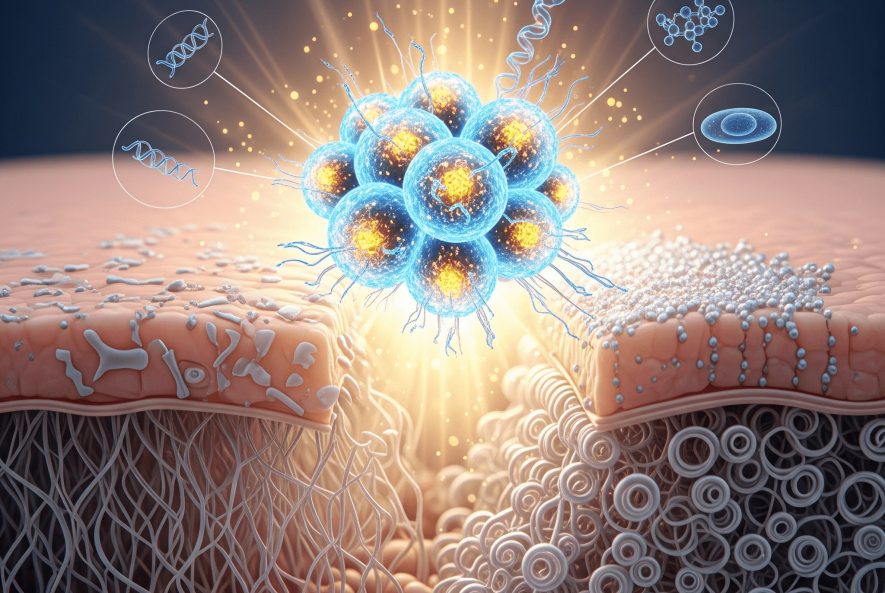
Mesenchymal stem cells (MSCs) have a remarkable ability to differentiate into specialized cells, such as fibroblasts—the very cells directly responsible for producing collagen in the skin.
Beyond cell replacement, MSCs also release biological signaling molecules—growth factors and cytokines—that activate the skin’s native fibroblasts to boost collagen synthesis. Key among these are:
- Transforming growth factor-beta (TGF-β): Directly stimulates collagen production.
• Vascular endothelial growth factor (VEGF): Supports new blood vessel formation, enhancing tissue nutrition and renewal.
Aesthetic Benefits of Stem Cell–Based Collagen Regeneration
This treatment offers an elegant, natural solution to cosmetic concerns linked to declining collagen levels, including:
✅ Reducing fine lines and wrinkles.
✅ Tightening the skin and restoring its natural elasticity.
✅ Improving the appearance of scars and evening out skin tone.
A Vital Role in Wound Healing
The benefits of stem cell therapy extend beyond aesthetics. It can also accelerate the healing of chronic wounds—such as diabetic ulcers—by:
- Stimulating collagen production.
• Supporting the formation of high-quality new tissue.
• Reducing inflammation and promoting new blood vessel growth to speed recovery.
How Is the Treatment Delivered?
Depending on each patient’s needs and condition, stem cell–based collagen regeneration can be offered through:
- Direct injections into targeted areas.
• Skincare products enriched with growth factors derived from stem cells.
• Advanced techniques such as 3D bioprinting to precisely deliver stem cells to damaged regions.
Beyond Aesthetics: Applications Outside the Skin
In addition to skin rejuvenation, stem cell–driven collagen production is used to:
- Repair joint and cartilage damage—helping to reduce pain and improve mobility.
• Heal tendons and ligaments after injuries, restoring strength and flexibility.
Conclusion
Stem cell therapy represents a promising future for rebuilding collagen and restoring the youthful vitality of skin and other tissues. By merging health and beauty, it brings back the skin’s natural elasticity and glow, while providing real regenerative support for damaged tissues.
With ongoing research and technological advancements, this technique is poised to become a cornerstone of modern regenerative medicine—uniting wrinkle treatment, scar improvement, and accelerated wound healing in one holistic approach.